Glamping cost can swing from around $80 a night for a simple canvas tent to well over $1,000 for a full-service lodge, and that range leaves a lot of travelers guessing. You find a beautiful dome on Instagram, click through to book, and then discover the price has doubled since you first saw it — or that a “basic” yurt costs more than a hotel room. The truth is that what you pay depends on far more than how fancy the tent looks.
This guide breaks down what you can realistically expect to pay by stay type, from tents, yurts and domes to cabins, treehouses and luxury lodges. We’ll also look at how season and timing shift rates, the hidden fees that change the final bill, and practical ways to pay less. By the end, you’ll know how to compare listings properly and spot which nightly rate actually offers good value for your trip.
What Glamping Cost Really Depends On
The single biggest factor in what you’ll pay is the type of structure you sleep in. A basic yurt on a family farm and a glass-domed suite on a cliffside ridge can differ by $500 or more per night, even though both get marketed under the same glamping label. Before you compare anything else, decide which category you’re actually shopping for.
Location and demand often matter more than amenities. A fairly simple safari tent near a popular national park can cost more than a luxurious dome three hours away, simply because of where it sits and how many people want to stay there. In many markets, you’re paying for proximity and scarcity, not thread count.
Season makes a surprising difference
Timing alone can swing rates by 30-50% between peak and shoulder months at the same property. The same tent that costs a premium in midsummer is often noticeably cheaper in late spring or early fall, sometimes with nearly identical weather. If your dates are flexible, checking two different months before booking is one of the fastest ways to lower your glamping cost without sacrificing anything.
Keep all three factors in mind as you browse, because listings rarely make them obvious. The sections below break down typical price ranges by stay type so you can benchmark any rate you’re quoted.
Glamping Cost by Stay Type: Tents, Yurts and Domes
At the entry level of glamping, canvas wall tents and yurts typically run $80-$150 per night. These are the closest option to traditional camping: you’ll usually share bathrooms and a kitchen with other guests, and bedding may or may not be included. For travelers who mostly want a warm, dry place to sleep near trails or water, this tier delivers the best price-to-experience ratio in glamping. It also works well for families and groups, since many sites let you reserve several units side by side at this price point.
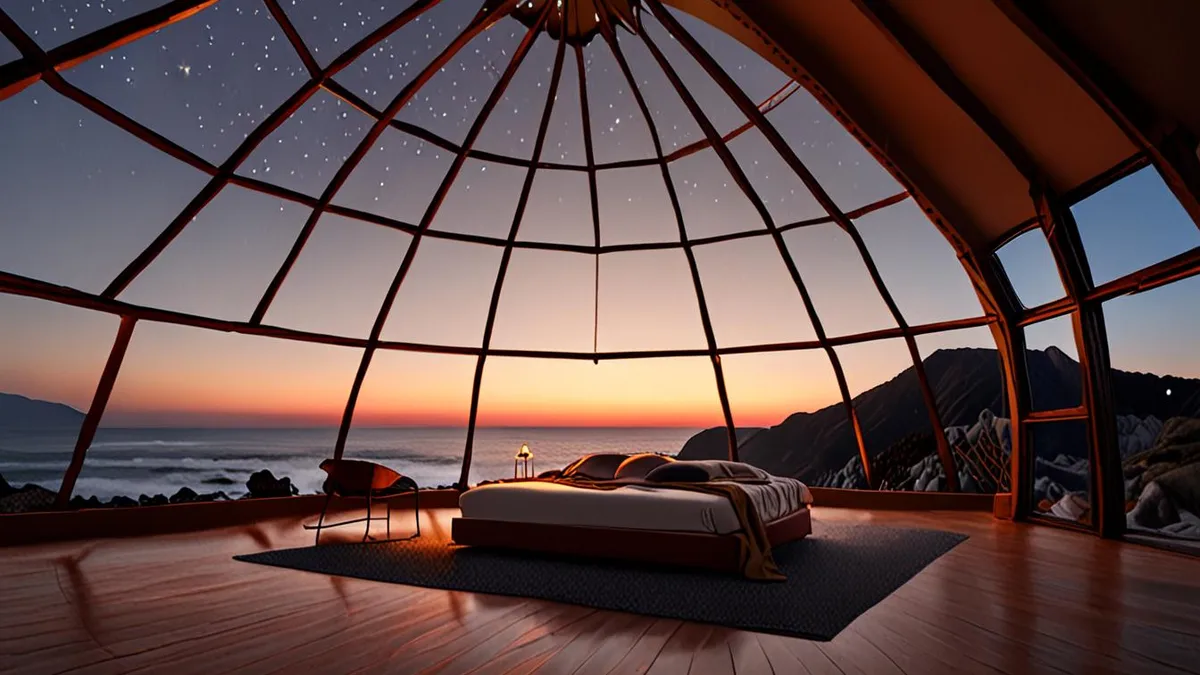
Step up to safari tents and geodesic domes and you’re generally in the $150-$350 per night range. The difference shows up the moment you arrive: private bathrooms, real beds on proper frames, and often a small deck or wood stove. Transparent-roof domes sit at the top of this range because the stargazing appeal lets owners charge a premium, especially in dark-sky areas. Many properties at this level also add small extras that matter in practice, such as coffee makers, outdoor showers, or a fire pit stocked with wood, so check the listing details before you compare.
- Heating and cooling vary widely at this level. Budget canvas tents often rely on a shared fire pit or a small propane heater, while many domes include electric heating — worth confirming if you’re booking outside summer.
- Private bathrooms are the key dividing line. If a listing at the lower end of the range does have an ensuite bathroom, that’s usually a strong value sign worth booking quickly.
- Transparent domes often book out furthest in advance. Their limited number and photo appeal mean peak-season weekends can disappear months ahead, so plan earlier than you would for a standard tent.
Glamping Cost for Cabins, Treehouses and Luxury Lodges
Once you move into solid structures, prices climb but so does comfort. Small cabins and A-frames typically sit in the mid-range tier and usually include a full kitchen, which changes the math for longer stays — cooking a few meals can offset the higher nightly rate compared to a tent. These are often the best pick for families who want glamping vibes without giving up a real bathroom, heating and a proper coffee setup.
Designer treehouses occupy their own niche at roughly $350-$600 per night. Many are built for two guests only, and adults-only policies are common, so they suit couples celebrating something rather than family groups. Full-service luxury lodges sit above that at $600-$1,000+ per night, but the rate often bundles in meals and guided activities, so compare them to hotels on a per-included-item basis rather than the sticker price alone. Before booking, ask exactly what is covered: some lodges include everything from breakfast to equipment, while others charge separately for dining and tours.
- Treehouses usually have strict capacity limits. Many are engineered for two adults with no extra bedding, so adding children or a third guest may simply not be possible regardless of budget.
- Lodge rates often include more than lodging. Daily meals, guided hikes, kayaking or spa access are frequently bundled in, which can make a pricier lodge night cheaper in practice than a cheaper cabin plus paid activities.
- Cabins reward longer stays. With a full kitchen and more space, weekly rates at this tier often work out noticeably lower per night than a short weekend booking, especially outside peak months.
How Season and Timing Affect Glamping Prices
Timing can move the price of the same tent or dome by hundreds of dollars. In most temperate destinations, the June-August peak season carries a noticeable premium over quieter months. A safari tent that costs $200 in May might list well above that in July, with no change to the site itself.
Why shoulder months are the sweet spot
May, September and October often deliver nearly identical weather to peak season, especially in mountain and coastal regions. Days stay warm, nights are still comfortable for sleeping under canvas, and crowds thin out noticeably. If your dates are flexible, shifting a trip by a few weeks is one of the easiest ways to save without downgrading your stay type.
Day of the week matters too. Weekday nights typically run 20-30% cheaper than Friday and Saturday stays, and some sites drop their rates even further from Sunday through Wednesday. If you can plan a Monday-to-Thursday trip, you may be able to afford a higher-tier unit, like a transparent-roof dome, for the same budget you’d spend on a basic safari tent over a weekend.
The same logic applies to city stays and other accommodation types. If you want to see how timing and demand shape rates elsewhere, this luxury suite stay with skyline views in Dubai is a good example of how premium pricing follows demand patterns. Glamping operators behave the same way: book the popular nights and you pay the popular price.
One practical tip: check the calendar view rather than a single date. Many booking platforms show a month at a glance, and the cheapest nights are often easy to spot. A two-night midweek stay in September frequently costs less than a single peak-season Saturday night.
Hidden Fees That Change the Real Glamping Cost
The nightly rate you see listed is rarely the amount you actually pay. Most glamping sites and booking platforms stack extra charges on top, and these can add a meaningful chunk to your total. The most common is a cleaning or service fee, which typically adds $25-$100 per booking on many platforms. Because it is charged per booking rather than per night, it hits one-night stays hardest, effectively doubling the cost of a short trip.
Minimum-stay rules are another frequent surprise. Two- or three-night minimums are common on weekends and holidays, which means a quick Saturday getaway may not even be possible, or may require paying for a night you don’t use. Always read the booking terms before you fall in love with a particular dome or treehouse.
Beyond those two, smaller add-ons quietly accumulate. Here are the extras to watch for:
- Pet fees, often charged per animal per night, which can turn a dog-friendly yurt into a poor value for a one-night stay
- Firewood and ice, sold on-site at a markup when campfires or fire pits are part of the experience you came for
- Activity add-ons like guided hikes, kayak rentals or stargazing sessions, which can run from modest to significant per-person charges
- Breakfast baskets or meal packages, sometimes priced per person and easy to miss in the fine print
- Late checkout or early check-in fees, occasionally applied at smaller sites with tight turnaround schedules
None of these extras are unreasonable on their own, but together they can add $20-$75 per stay. Ask the host for a full price breakdown before booking so you can compare sites on the real total, not the headline rate.
How to Get a Better Glamping Price
Glamping prices are negotiable in a sense: not by haggling with the host, but by how and when you book. Unlike hotels, most glamping sites have limited inventory — often just a handful of tents, domes or cabins — so the best units disappear quickly and rarely get discounted once they are gone. The difference between a well-timed booking and a rushed one can easily cover the cost of an extra night, or at least a generous chunk of the cleaning fees. Here’s how to approach it.
- Book 3-6 months ahead for peak-season weekends. The best units at popular sites, especially transparent domes and designer treehouses, are often claimed early for summer weekends. Booking well in advance also gives you the full pick of inventory instead of whatever is left.
- Go last minute in shoulder season. In May, September and October, hosts with empty units frequently discount close to the arrival date. If your schedule is flexible, watching listings a week or two out can land you a premium unit at a basic-unit price.
- Compare per-person vs per-unit pricing for groups of 4+. Some sites charge per unit, others per guest. For a family or group of four or more, a per-unit rate usually wins, but a per-person rate that includes meals and activities may actually be better value. Run the math both ways before committing.
- Check what’s included before comparing nightly rates. Linens, towels, meals, firewood and activities vary widely between sites. A $250 night with breakfast, linens and a guided hike included can beat a $180 night where you rent all of that separately.
It also pays to book directly with the site when possible. Some operators offer better rates or perks like flexible cancellation outside the big platforms, since they avoid paying commission. A quick email or phone call can also surface midweek specials or longer-stay discounts that never appear on booking sites. Whatever route you take, keep the total price — nightly rate plus fees, plus anything you’ll rent separately — as your measuring stick. That’s the number that actually tells you which deal is better.
The Bottom Line on Glamping Cost
So what should you actually expect to pay? For simple canvas tents and yurts, budget roughly $80-$150 per night. Mid-range safari tents and domes typically run $150-$350, while designer treehouses and full-service lodges sit at $350-$1,000+ per night. That is a wide range, but stay type explains most of it.
Keep in mind that season, cleaning fees and booking timing can shift your final price by 30-50%, so the nightly rate you see advertised is rarely the whole story. Before comparing options, check exactly what is included: linens, meals, bathrooms and activities can make a higher rate the better deal. If you have stayed somewhere great recently, share your experience or leave a comment below.