Choosing between an overwater villa vs beach villa is the single biggest decision you’ll make when booking a Maldives resort, and it’s easy to get stuck. The overwater option looks like the postcard version of paradise, but it can cost a lot more. The beach villa looks like the sensible choice, yet you wonder if you’ll regret skipping the ladder into the lagoon.
This guide breaks the decision down into the parts that actually matter: how the two villa types differ in design, what the overwater premium really buys, how privacy, noise and views compare, and how water access works in practice. We’ll also look at which villa type suits couples, families and longer stays, then finish with practical booking tips on timing, resort maps and upgrade offers. By the end, you should know exactly which villa fits your trip, your budget and the people traveling with you.
Overwater Villa vs Beach Villa: The Core Differences
The two villa types look similar in resort photos but deliver completely different experiences on the ground, or rather, on the water. Knowing what each one physically is makes the rest of the comparison much easier.
What an overwater villa actually is
An overwater villa sits on stilts above the lagoon, usually a short walk along a timber jetty from the island shore. The villa opens onto a private deck with sun loungers, and many designs include a glass floor panel where you can watch fish pass beneath your feet. A ladder or set of steps leading straight into the water is also common, though not universal, so it’s worth confirming with your resort before booking.
What a beach villa actually is
A beach villa sits on the island itself, set back from the shoreline among the vegetation. Most come with a private garden, and many feature an outdoor bathroom as part of the design. From your terrace or garden, you typically walk a few steps directly onto the sand, so the beach becomes an extension of your living space.
The trade-off is simple: overwater villas give you uninterrupted ocean views and immediate water access, but they give up space and natural shade to get it. Beach villas offer more room to spread out, plus greenery, palm cover and that feeling of being grounded on solid land. Neither is objectively better; they simply suit different priorities, which is exactly what the next sections help you weigh up.
Price: What the Overwater Premium Actually Buys
Let’s talk numbers. At the same resort, expect an overwater villa to run roughly 30-60% above a comparable beach villa. That’s a significant jump, so it’s fair to ask what you’re actually paying for.
The answer is not floor space. In fact, beach villas often deliver more square meters for the lower price: they commonly range from around 80-200 sqm, while overwater villas usually start at about 60-100 sqm. What the premium buys instead is the position, the unobstructed view over the lagoon, the privacy of having no neighbors beside you, and the ability to step off your deck into the water. You’re paying for the setting, not the footprint. If you want a sense of how dramatic that lagoon setting can feel, this Maldives lagoon resort escape gives a good picture of what overwater living looks like in practice.
Timing also changes the maths considerably. The wet season from May to November brings lower rates across the board, and the gap between the two categories narrows during these months. That makes an overwater upgrade noticeably more affordable than it would be in high season.
When comparing prices between the two categories, look beyond the nightly rate:
- Meal plans and transfers: these are usually priced the same regardless of villa category, so the percentage gap between villa types is what matters, not the total bill.
- Upgrade offers at check-in: some resorts offer discounted overwater upgrades on arrival if villas are unsold, which can shrink the premium well below its high-season level.
- Deck extras: overwater villas at some resorts add private pools or sun decks at higher categories, so check what’s included in the base price before assuming you need to climb a category.
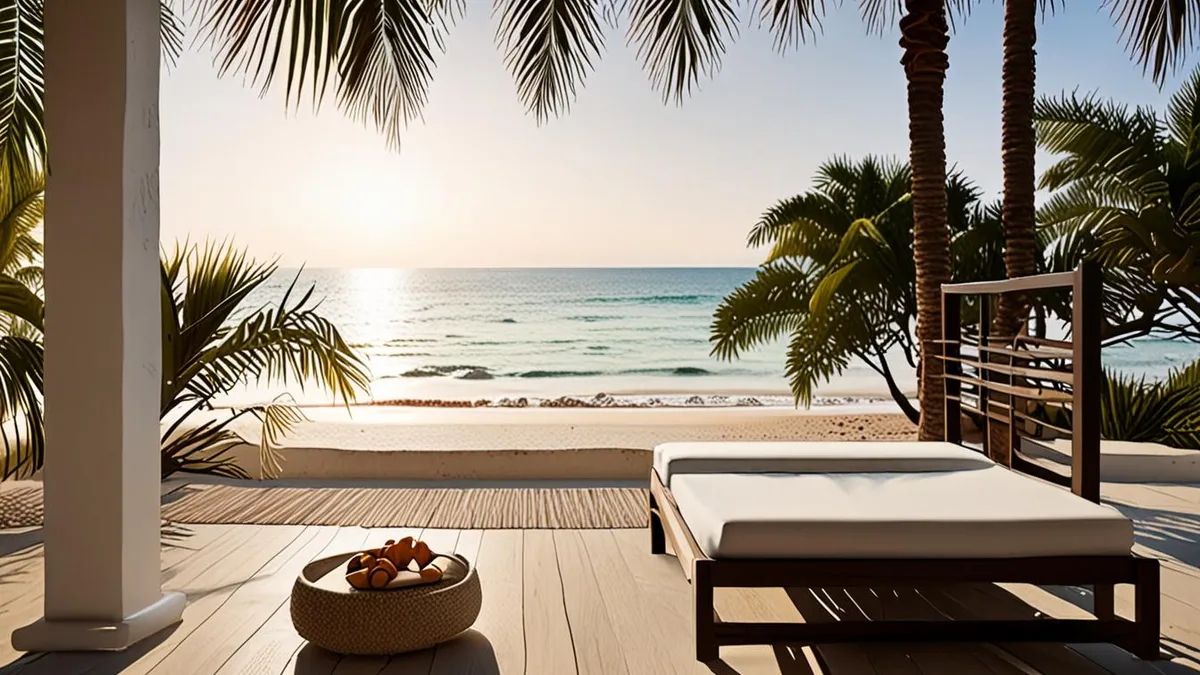
Privacy, Noise and Views Compared
Privacy works differently in each villa type, and it’s one of the areas where the overwater premium genuinely earns its cost.
How secluded is each villa type?
Overwater villas have no neighbors behind or beside them, only the walkway in front. That means your deck and its view are essentially your own, and many guests describe the feeling as being alone at sea. The trade-off is exposure: overwater decks sit above open water with little natural shade, so wind and sun hit them directly, and you’ll rely on umbrellas or covered sections of the deck for relief.
Beach villas take the opposite approach. They get palm cover, planted gardens and natural shade throughout the day, but they can share garden walls or connecting paths with adjacent villas. Two beach villas of the same category can feel completely different depending on layout, so at resorts where villa positioning varies, the specific villa matters more than the category name. If seclusion among greenery appeals to you, a resort with well-spaced garden villas, such as the one described in this Maldives lagoon serenity resort feature, shows how much difference thoughtful layout makes.
The walkway factor
One detail catches many first-time visitors off guard: walkway foot traffic can pass quite close to some overwater villas, and guests strolling between the island and their own villas may look straight across your deck. Most resorts angle decks or screen them with panels, but it varies by resort and by individual villa. Before booking, check the deck orientation on the resort map and, if privacy matters to you, ask the resort directly which overwater villas sit furthest from the main jetty.
Water Access: Lagoon Ladders vs Beach Entry
The biggest practical difference between the two villa types comes down to how you get into the water. Many overwater villas include a ladder or a short flight of steps that drops you straight from your deck into the lagoon. If snorkelling a house reef is high on your list, this is hard to beat: you can roll out of bed, slip into the water and be finning over coral within a minute, without walking across hot sand or rinsing off on the way back.
That said, direct water access is not universal. Some resorts restrict lagoon entry from overwater villas for safety reasons, such as strong currents, boat traffic or shallow coral that could injure swimmers. Confirm the exact situation with your resort before booking rather than assuming a ladder comes as standard. If snorkelling from your deck is the main reason you want an overwater villa, ask specifically whether entry is permitted from that villa category.
Beach villas work differently. Entry is a gentle, shallow walk into the water from the sand, which suits casual swimmers, waders and families with children far better than a ladder drop. Depths also differ: overwater lagoons typically run 1.5-3 meters deep, comfortable for snorkellers, while beach shallows stay ankle-to-knee deep and are ideal for wading.
- Ladder style varies: some villas have fixed metal rungs, others have wide steps with a handrail, which matters if you are less confident climbing out of the water.
- Tide and depth change: a lagoon that is easy to enter at high tide can sit much shallower at low tide, so ask staff about the best hours for swimming from your deck.
- House reef location counts: if the reef sits a swim away rather than below your villa, check whether the resort offers guided snorkelling or marks a safe route out.
- Water shoes help: beach entry often means walking over sand, coral rubble or rock before the water deepens, so pack reef shoes for comfort.
For a closer look at what a lagoon-focused stay feels like, this crystal lagoon resort in the Maldives shows the kind of water access that makes villa choice matter so much.
Which Villa Type Suits Your Traveling Party
The right villa depends less on the category name and more on who is traveling with you. The same overwater villa that feels like pure romance for a couple can feel restrictive for a family with a toddler, and a beach villa that seems basic to honeymooners can be a lifesaver for parents chasing small children across a garden. Match the villa to your party before you match it to your budget.
Couples and honeymooners usually get the most value from an overwater villa. The privacy, the uninterrupted ocean view and the feeling of being suspended over the lagoon deliver exactly what most people book the Maldives for, and on shorter trips of a few nights, that experience is worth prioritising over extra floor space.
Families with young children are generally better served by beach villas. Many resorts restrict overwater deck and pool access for toddlers, which can turn a dreamy overwater stay into a logistical headache with a two-year-old in tow. A beach villa gives children room to run, sand to dig in and water they can enter safely at knee depth.
Travelers who are prone to seasickness or simply uneasy around open water should lean toward a beach villa. Even calm lagoons move subtly under an overwater deck, and some people feel it constantly. On solid ground, with a garden and the sound of waves from a distance, the stay feels anchored.
- Mixed groups: some resorts offer two-bedroom beach villas or adjacent categories, letting families keep everyone on the sand while one couple books overwater separately.
- Teenagers and confident swimmers: older kids often prefer overwater access for snorkelling straight off the deck, so the restriction mostly applies to younger children.
- Mobility considerations: beach villas usually involve fewer steps and no walkway walking, which matters for guests with limited mobility or heavy dive gear.
- Longer stays: from 7 nights onward, a beach villa’s extra space and private garden make a real difference to comfort, giving you room to spread out rather than share one deck.
How to Choose and Book the Right Villa
Choosing between the two villa types is only half the decision; the other half is booking the specific villa you actually want. Two overwater villas at the same resort can offer completely different experiences depending on their position, orientation and included features. A little research before you pay makes the difference between the villa you pictured and the one you end up with, and it takes less effort than most travelers expect.
- Book early for high season. For travel between December and April, aim to reserve 6-11 months ahead. Early booking secures the exact villa category you want and, just as importantly, the deck orientation, since the best-positioned villas sell out first in peak months. Last-minute availability in high season tends to be limited to the categories other guests passed over.
- Study the resort map. Overwater villas facing the sunrise side get bright mornings and calm early light; sunset-side villas deliver evening color from your deck. Neither is objectively better, but the choice shapes your daily rhythm, so pick the one that matches how you spend your hours. Maps also show how far each villa sits along the walkway from shore, which matters if you plan to walk back and forth often.
- Use the wet season to upgrade. From May to November, lower rates shrink the overwater premium and resorts discount more freely. Compare upgrade offers at booking time and again closer to arrival; the gap between categories can narrow enough to make an upgrade genuinely affordable.
- Verify what the premium includes. Before paying overwater rates, confirm whether your villa has direct lagoon access, a private pool or a glass floor panel. Not every category includes every feature, and assuming otherwise is the most common booking disappointment.
Once you have confirmed these details in writing with the resort, you can commit to your dates with confidence. Ask for the villa number or block if the resort allows it, since even within one category, positions vary. A villa chosen this way, rather than accepted by default, is the one you will remember long after the trip ends.
Wrapping Up: Picking Between Overwater and Beach
So which one should you book? If your trip is about the view, the privacy and stepping straight into the lagoon from your deck, the overwater villa delivers exactly that experience. If you want more room for your money, a garden, and an easy, safe setup for young children, the beach villa is the smarter pick.
As a rule of thumb, couples on shorter trips tend to feel the 30-60% overwater premium is money well spent, while families and travelers staying a week or longer get more out of a beach villa’s extra space. Keep in mind that both the season you travel in and how far ahead you book will shape the price gap and the villas still available to you. Still torn between the two? Tell us about your trip in the comments below, or share this article with your travel partner.